
Buying a new home in the UAE should be an exciting experience. You imagine getting your keys, setting up your space, and starting a new chapter. However, for many buyers, in particular those who are buying off-plan properties, there could be worries too. Whether you are buying a brand-new property from a developer or a resale home from an existing owner, concerns are common.
Is everything really finished?
Are there hidden problems?
What if issues show up after I move in?
These worries are normal. This is exactly why snagging is so important. It is the easiest part of the process of protecting you until you have full possession of the house.
Snagging catches issues early, when they can still be clearly identified and addressed. This is a good way to put your mind at rest for the future.

What is Snagging in Simple Terms?
Snagging is a detailed check of a property carried out before handover or purchase to spot any issues early. While the process is similar, the purpose of snagging is slightly different depending on whether the property is new or a resale.
For new properties, snagging is done before accepting handover from the developer.
For resale properties, snagging works as a detailed condition assessment before finalising the purchase.
A certified inspector will visit the flat or villa to check every detail of it. This will also include walls, floors, ceilings, doors, windows, bathrooms, kitchen, lighting, and air conditioning.
The goal is simple:
To find problems before you move in, not after.
This check is done early, so issues can be raised with the developer for new properties or used to assess risks in resale homes.
Common Problems Snagging Can Find
Many homes look perfect at first glance, if you are first time buyer in Dubai. But small issues often hide in plain sight.
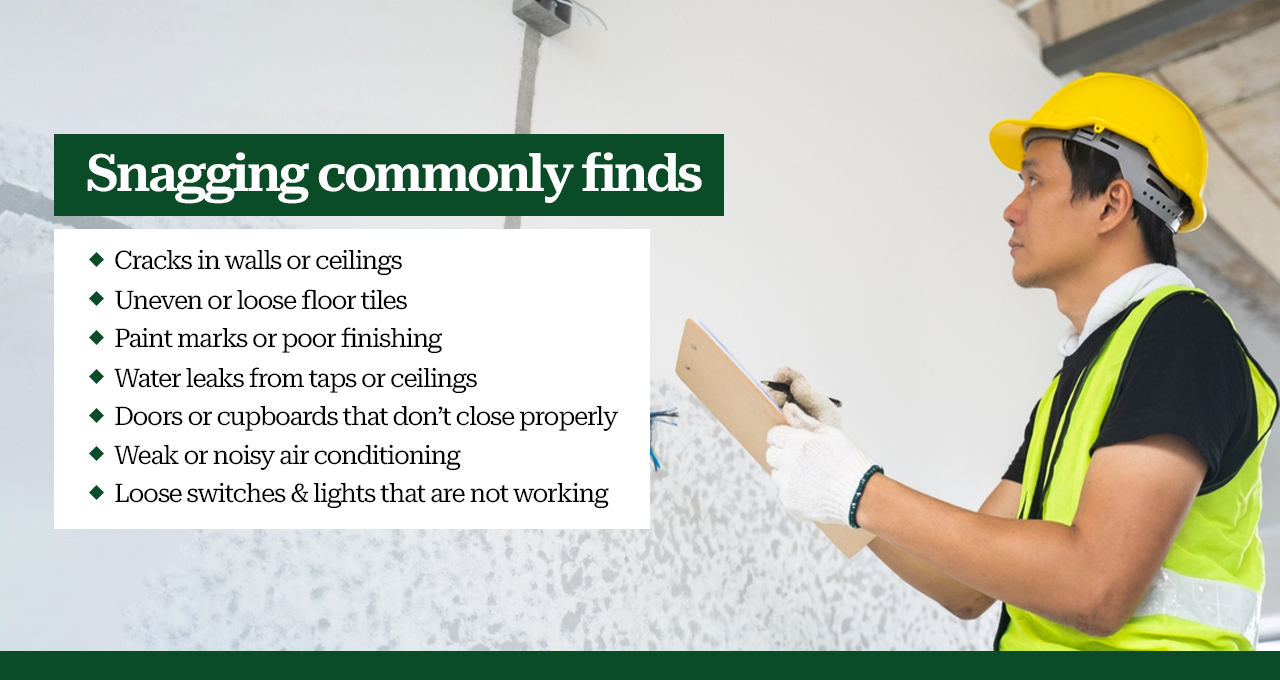
Snagging commonly finds:
- Cracks in walls or ceilings
- Uneven or loose floor tiles
- Paint marks or poor finishing
- Water leaks from taps or ceilings
- Doors or cupboards that don’t close properly
- Weak or noisy air conditioning
- Loose switches & lights that are not working
These might just be small, but they can cause costly repairs down the road.
Why Fixing Small Problems Early Can Make a Big Difference
A small leak today can become water damage tomorrow.
A tiny crack can spread over time.
Poor finishing lowers the comfort of your home.
If these problems are not reported early, you may end up paying for repairs yourself. Snagging helps you avoid this by catching issues when fixes are still the developer’s duty.
When is the Right Time to Do Snagging?
The best time to book snagging is after you receive the handover notice, but before you sign acceptance or make the final payment. This is when you still have strong rights to ask for corrections.
In cases where the property is being purchased from an existing owner, snagging is ideally carried out before signing the sales agreement or completing the purchase. This allows buyers to clearly understand the property’s condition, assess risks, and negotiate if needed.
Early snagging gives you control and confidence.
Understanding the Defect Liability Period
In the UAE, most developers offer a 12-month defect liability period after handover. During this time, certain defects can still be reported.
This defect liability period applies only to new properties purchased from developers.
Resale properties, on the other hand, do not come with defect liability coverage, which makes pre-purchase snagging even more important.
Why Snagging is Especially Important for Off-Plan Buyers
Off-plan buyers often buy without seeing the finished home. Snagging is your first real opportunity to check what you received against what you were promised.
It also helps you ensure that your house is safe, comfortable, and ready for occupation from the word go.
Why Snagging is Crucial for Resale Buyers Too
When buying a resale property, what you see isn’t always the full picture. A home may look well-maintained, but hidden issues can still exist beneath the surface.
Snagging provides a clear picture of the property’s true condition. It helps identify hidden issues, assess maintenance needs, and estimate future repair costs. This information is valuable for making informed decisions and negotiating prices or repairs before purchase.
Your Home Deserves a Smooth Start
Your home is not just a property. It is your savings, your comfort, and your future.
Snagging gives you clarity, confidence, and protection at one of the most important moments of your purchase.
At Prime Rate Hub, we support buyers through every stage of handover. From guiding you on snagging to helping you understand your next steps, our team makes the process clear and stress-free.
Before you commit to your home, talk to us and make sure everything is just right.
FAQs
Snagging is, in essenc,e a process of checking the new home prior to completion to determine if there are any defects, whether cracks, leaks, poor finish, or ill-fitting fixtures, for example.
Yes. Off-plan homes should always be snagged because buyers only see the final product at handover.
If snagging is done before final acceptance, the developer is responsible for fixing the reported issues.
Yes. The cost of snagging is small compared to future repair expenses and stress.