

When buying a property in Abu Dhabi, it’s easy to focus on the purchase price and mortgage amount. However, many buyers overlook the additional expenses involved in completing the transaction.
These hidden costs can add between 4% and 7%, or even more, to your overall property budget. Understanding these expenses before you buy allows you to plan your finances effectively, avoid unexpected costs, and complete your purchase with confidence.
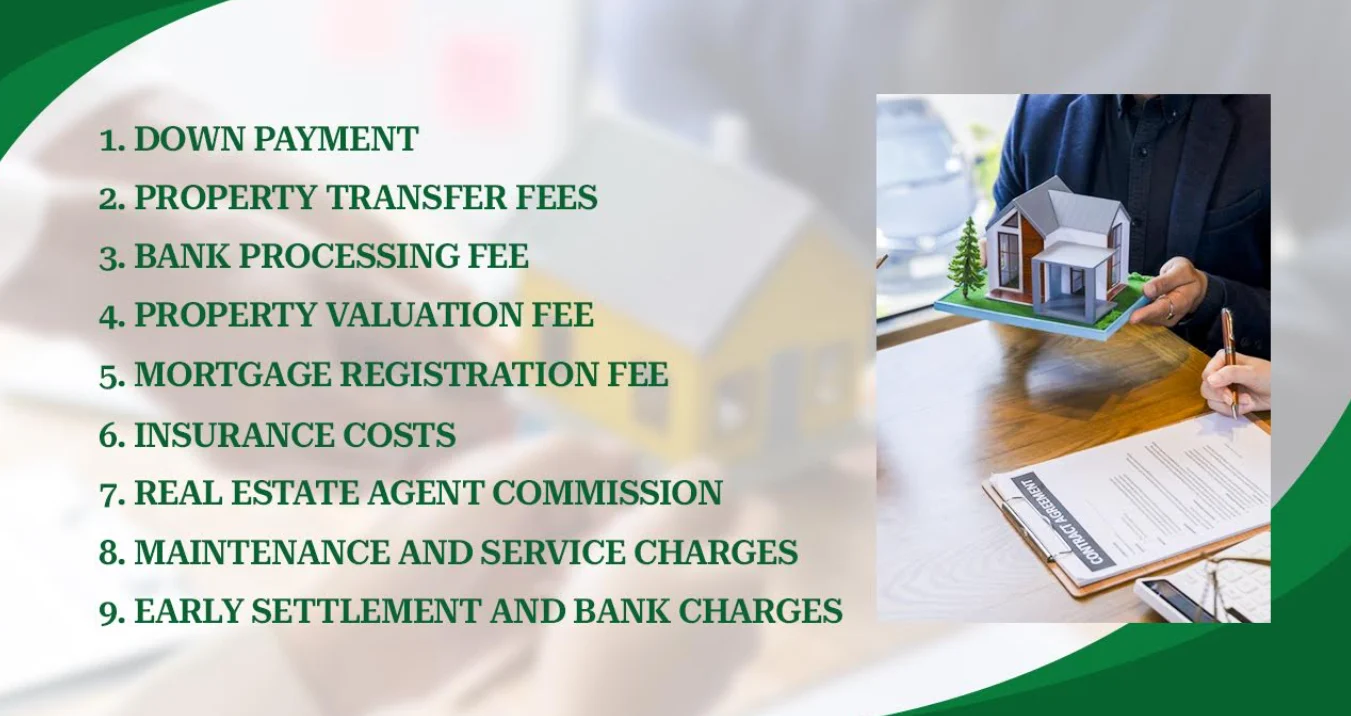
1. Down Payment
The down payment is typically the largest upfront expense when purchasing a property.
According to UAE Central Bank regulations, the minimum down payment generally starts from:
- UAE Nationals: 15%
- Expat Residents: 20%
- Non-Residents: 40% or more
This amount must come from your own funds and cannot be financed through a mortgage.
2. Property Transfer Fees
Property ownership transfers in Abu Dhabi involve government charges that form part of the purchase process.
These typically include:
- Property transfer registration fees
- Administrative charges
The exact amount varies depending on the transaction, but these fees should always be included in your budget.
3. Bank Processing Fee
Most lenders charge a processing fee when arranging your mortgage.
The fee typically ranges from 0.5% to 1% of the approved loan amount, although some banks may offer promotional discounts or waive this cost.
4. Property Valuation Fee
Before approving your mortgage application, the bank will arrange an independent property valuation to confirm the property’s market value.
Typical valuation costs range between AED 2,500 and AED 3,500.
5. Mortgage Registration Fee
Once your mortgage has been approved, it must be officially registered.
A mortgage registration fee is charged based on the loan amount and is a mandatory part of securing your financing.
6. Insurance Costs
Most mortgage providers require two types of insurance.
Life Insurance
Life insurance helps cover the outstanding mortgage balance in the event of the borrower’s death.
Property Insurance
Property insurance protects your home against insured risks. The premium depends on the property’s value and the level of coverage selected.
7. Real Estate Agent Commission
If you’re purchasing a resale property, you’ll usually pay a real estate agent’s commission.
This is typically 2% of the property’s purchase price.
8. Maintenance and Service Charges
Owning a property also comes with ongoing costs after the purchase has been completed.
These may include:
- Service charges for apartments
- Property maintenance expenses
- Community fees
The amount varies depending on the property’s location, size, and community.
9. Early Settlement and Bank Charges
Although these costs may not apply immediately, they’re worth considering as part of your long-term financial planning.
If you decide to refinance or repay your mortgage early, you may incur:
- Early settlement fees
- Bank administrative charges
Understanding these costs in advance can help you avoid surprises later.
Example of Total Upfront Costs
For a property valued at AED 2,000,000, your estimated upfront costs could include:
- Down payment: AED 400,000
- Additional fees and charges: Approximately AED 80,000 or more
This brings the estimated upfront investment to around AED 480,000, depending on the mortgage structure, lender, and transaction costs.
Why Understanding These Costs Is Important
Many property buyers underestimate the total amount required to complete a purchase.
Common challenges include:
- Budgeting only for the down payment
- Overlooking government and bank fees
- Running short of funds during the transfer process
Planning for all associated costs can help ensure a smoother buying experience and reduce unnecessary financial stress.
How Hidden Costs Affect Your Mortgage Planning
Additional purchase costs can influence:
- Your available savings
- Your mortgage structure
- Your overall borrowing capacity
In some situations, buyers may need to adjust their property budget or review their financing strategy to accommodate these expenses.
To know more, read this article: Why Snagging Is a Must Before Property Handover in the UAE
Common Mistakes to Avoid
Many buyers could avoid unexpected costs by planning ahead.
Some of the most common mistakes include:
- Ignoring the total transaction cost
- Forgetting to budget for service charges
- Underestimating insurance expenses
- Failing to compare bank fees
- Using all available savings for the down payment
How Prime Rate Hub Can Help
At Prime Rate Hub, we do more than help you secure a mortgage.
Our team helps you:
- Calculate the total cost of buying a property before you commit.
- Structure your mortgage around your available budget.
- Compare fees and offers from more than 20 UAE banks.
- Identify potential financial gaps before they become a problem.
- Plan every stage of your property purchase with confidence.
By understanding the complete financial picture, you can make informed decisions and avoid unexpected costs along the way.
Conclusion
Buying property in Abu Dhabi involves much more than paying the purchase price. From the down payment and transfer fees to insurance and ongoing service charges, every cost should be factored into your financial plan.
If you’re preparing to buy a property, Prime Rate Hub can help you understand the full cost of ownership, compare mortgage options, and create a financing strategy that fits your budget and long-term goals.
Related guides and services
- Mortgage closing costs in the UAE
- Mortgage down payment guide
- New purchase, resale and final payment financing
- What Happens After Mortgage Approval in Abu Dhabi? Payments, EIBOR, and What to Do Next (2026 Guide)
- How Much Mortgage Can I Get in Abu Dhabi? (2026 Guide with Real Examples)
- Final Payment to Developer in Abu Dhabi: How to Finance It Without Paying Full Cash (2026 Guide)
Frequently Asked Questions
Hidden costs typically include the down payment, transfer fees, mortgage processing fees, valuation charges, insurance, mortgage registration, and agent commission.
Many buyers should allow approximately 5% to 7% of the property’s value to cover additional purchase expenses.
In most cases, these expenses must be paid separately and cannot be financed through your home loan.
For resale properties, agent commission is generally payable as part of the transaction.
Service charges are usually payable annually after the property purchase has been completed.
No. Processing fees and other charges vary between lenders, making it worthwhile to compare your options.
For most buyers, the down payment is the biggest upfront cost, followed by government and mortgage-related fees.
While many government charges are fixed, some bank fees may be negotiable depending on the lender and mortgage offer.