


Many homeowners in Abu Dhabi are still paying mortgage rates that were fixed during periods of higher interest rates.
What many people do not realise is this:
Your mortgage is not fixed forever, and it may be possible to secure better terms.
Mortgage refinancing in Abu Dhabi allows homeowners to restructure their loan, reduce their interest rate, and improve monthly cash flow.
What is Mortgage Refinancing?
Mortgage refinancing, also known as a mortgage buyout, means replacing your existing mortgage with a new one, either:
- With your current bank through rate renegotiation
- By switching to another bank
The goal is simple:
Reduce your borrowing costs and improve your loan terms.
Why Homeowners Refinance in Abu Dhabi
1. Reduce Monthly Instalments
Lower interest rates generally lead to lower monthly mortgage payments, helping improve your overall financial flexibility.
2. Benefit from Lower EIBOR
Many UAE mortgages are linked to:
EIBOR + bank margin
When EIBOR falls, refinancing can help homeowners take advantage of lower borrowing costs sooner.
3. Improve Loan Terms
Refinancing may allow you to:
- Adjust your loan tenure
- Change your rate structure
- Improve repayment flexibility
4. Release Equity (Cash-Out)
If your property’s value has increased, refinancing may allow you to access additional funds through a cash-out option.
Real Savings Example
Consider a mortgage balance of AED 2,000,000:
- A 0.25% rate reduction could save approximately AED 10,000 per year
- A 0.50% rate reduction could save AED 20,000 or more annually
Over the life of the loan, these savings can add up significantly.
When Should You Consider Refinancing?
You should review your mortgage if:
- Your fixed-rate period is ending
- EIBOR is trending downward
- Banks are offering more competitive rates
- Your current mortgage rate feels high
- Your financial situation has improved
Timing is critical because acting early can lead to greater savings.
Costs of Refinancing in the UAE
Refinancing is not free, but in many cases the long-term savings outweigh the costs involved.
Typical expenses may include:
- Early settlement fee (up to 1%, subject to applicable caps)
- Processing fee
- Property valuation fee
A detailed financial analysis is essential to determine whether refinancing will deliver meaningful savings.
Switching Banks vs Staying with Your Current Bank
Stay with Your Current Bank
Benefits may include:
- Faster processing
- Less paperwork
- Existing banking relationship
Switch to Another Bank
Potential advantages include:
- Access to lower rates
- More competitive mortgage offers
- Greater long-term savings
The best option depends on your financial profile, mortgage balance, and current market conditions.
How EIBOR Affects Your Mortgage
EIBOR plays a major role in refinancing decisions across the UAE mortgage market.
If EIBOR decreases:
- Refinancing may become more attractive
If EIBOR increases:
- Fixing your interest rate may provide greater stability
Understanding how EIBOR impacts your mortgage can help you make more informed long-term financial decisions.
To know more, you may also read this article: How EIBOR Drives Mortgage Pricing: Understanding Low-Interest Mortgage in Abu Dhabi
Common Refinancing Mistakes to Avoid
Homeowners often miss savings opportunities by making avoidable mistakes, including:
- Waiting too long to review their mortgage
- Ignoring refinancing opportunities
- Not comparing multiple banks
- Focusing only on interest rates while ignoring fees and loan structure
- Assuming their current bank always offers the best deal
Mortgage Refinancing Timeline
A typical refinancing process includes:
- Evaluation: 2 to 3 days
- Property valuation: 2 to 4 days
- Approval: 3 to 5 days
- Transfer process: depends on the bank
Most refinances are completed within 2 to 4 weeks.
You may also read this article: Expat Mortgage Solutions in Abu Dhabi: A Smarter Guide to Property Financing in 2026
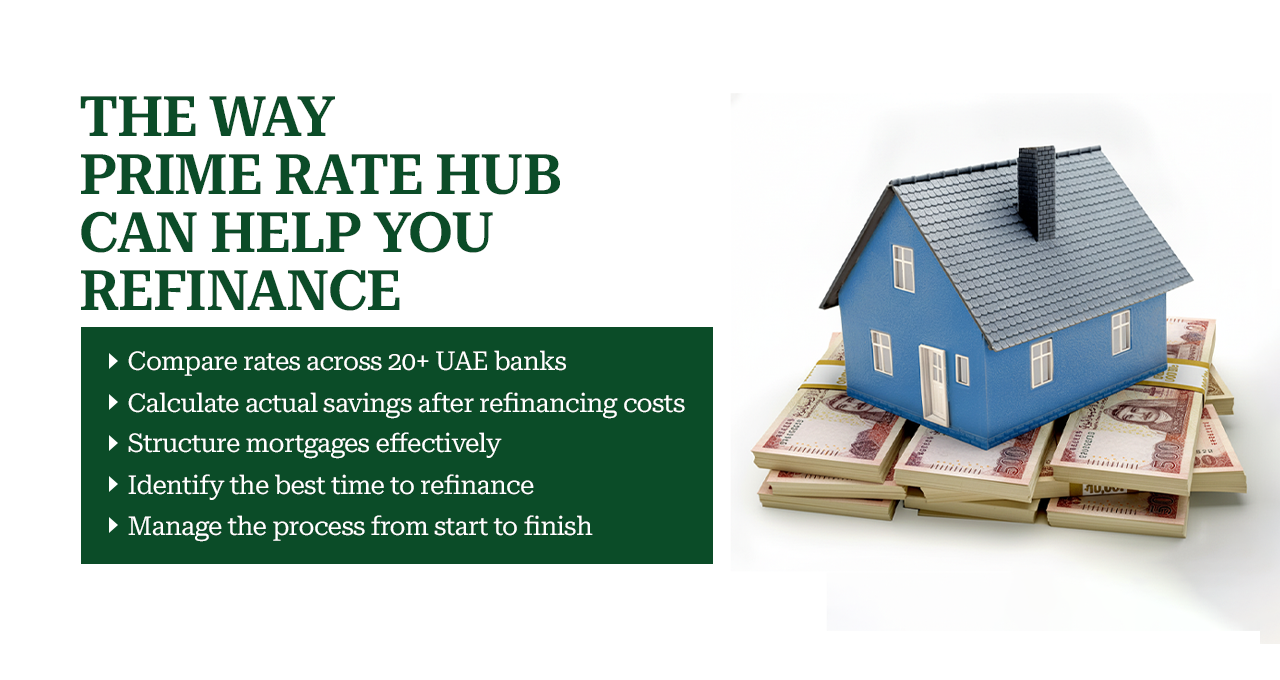
How Prime Rate Hub Can Help
Refinancing requires accurate calculations, market knowledge, and proper timing.
At Prime Rate Hub, we help clients:
- Compare rates across 20+ UAE banks
- Calculate actual savings after refinancing costs
- Structure mortgages effectively
- Identify the best time to refinance
- Manage the process from start to finish
Our goal is simple:
Ensure you do not overpay on your mortgage.
Conclusion
Mortgage refinancing in Abu Dhabi is one of the most effective ways for homeowners to reduce borrowing costs and improve their financial position.
Even small reductions in interest rates can generate substantial savings over the life of a mortgage. The key is understanding when refinancing makes sense, comparing available options, and selecting the right mortgage structure for your needs.
By reviewing your mortgage regularly and seeking expert guidance, you can ensure you are taking advantage of the most competitive opportunities available in the UAE market.
Related guides and services
- Refinance, buyout and equity release
- Mortgage calculator
- Current mortgage rates in the UAE
- Mortgage Buyout in the UAE: How to Switch Banks and Reduce Your Home Loan Costs (2026 Guide)
- Unlock Better Rates and Hidden Cash: A Smart Guide to Buyout and Equity Release in the UAE
- Refinance, Buyout and Equity Release in Dubai & Abu Dhabi: What’s in It for You?
Frequently Asked Questions
Mortgage refinancing involves replacing your existing mortgage with a new loan that offers better rates, terms, or repayment options.
In many cases, yes. Refinancing can be worthwhile when the total savings exceed the costs associated with switching or restructuring the loan.
Savings vary depending on your mortgage size and the rate reduction achieved. Even a 0.25% reduction can save thousands of dirhams annually.
Yes. Many banks offer mortgage renegotiation options for existing customers.
Yes. This is commonly known as a mortgage buyout and may provide access to more competitive rates.
Yes. Common costs include early settlement fees, valuation fees, and processing charges.
Most mortgage refinancing cases are completed within 2 to 4 weeks, depending on the bank and documentation requirements.
Yes. If your property’s value and eligibility criteria support it, you may be able to access equity through a cash-out refinance.